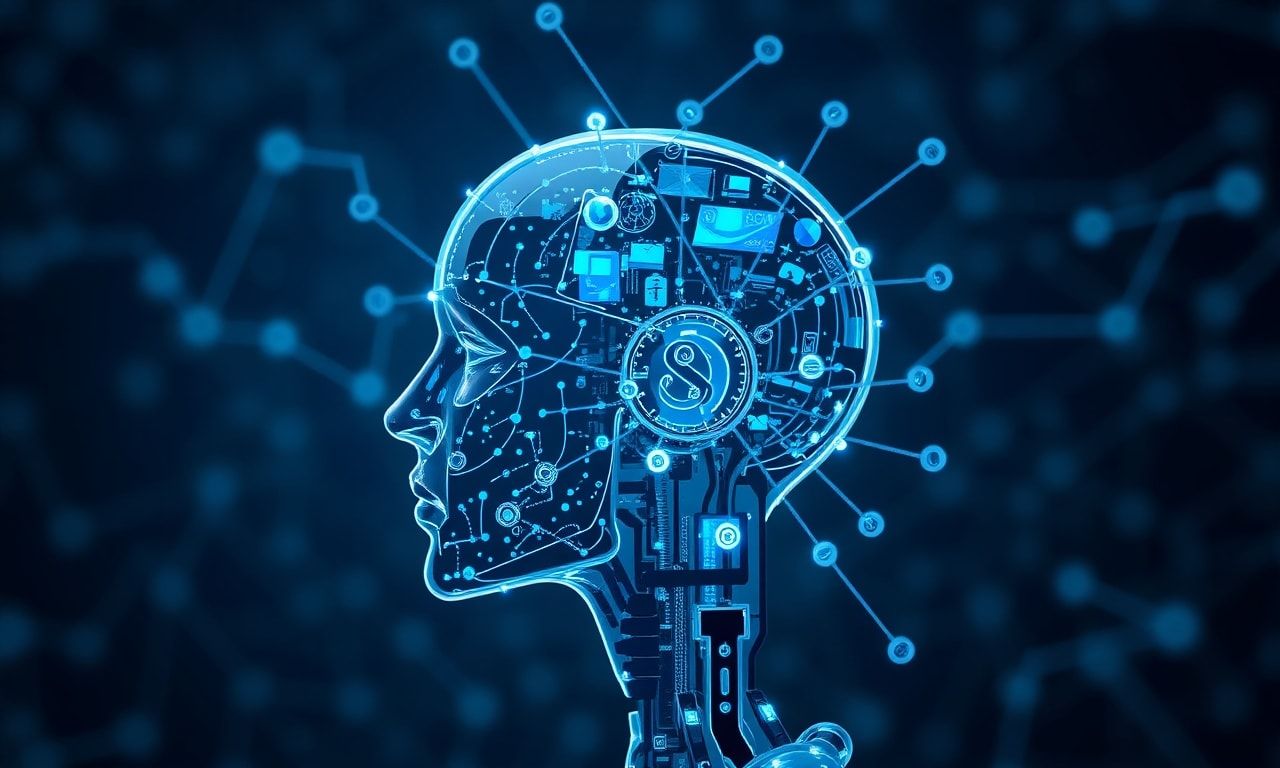
The Rise of Artificial Intelligence
Artificial Intelligence (AI) has emerged as a transformative force in the technology sector, revolutionizing industries and redefining the boundaries of what machines can achieve. From its humble beginnings as a theoretical concept to its current status as a cornerstone of modern innovation, AI has undergone a remarkable evolution. This article delves into the journey of AI, its current applications, and its future potential, providing a comprehensive overview of its impact on technology.
The Evolution of AI: From Theory to Reality
The concept of AI dates back to the 1950s, when pioneers like Alan Turing and John McCarthy laid the groundwork for what would become a revolutionary field. Early AI systems were rudimentary, focusing on simple tasks such as solving mathematical problems or playing chess. However, advancements in computing power and data processing capabilities have propelled AI into the mainstream, enabling it to tackle complex challenges across various domains.
Over the decades, AI has evolved through several key milestones. The development of machine learning algorithms in the 1980s and 1990s marked a significant leap forward, allowing machines to learn from data and improve their performance over time. The advent of deep learning, a subset of machine learning, further accelerated AI’s progress, enabling breakthroughs in areas such as computer vision, natural language processing, and speech recognition.
The Impact of AI on Various Industries
AI’s influence extends across a wide range of industries, from healthcare to finance, and from transportation to entertainment. In healthcare, AI-powered diagnostic tools are enhancing the accuracy and speed of medical diagnoses, while AI-driven drug discovery is accelerating the development of new treatments. In finance, AI algorithms are optimizing investment strategies and detecting fraudulent activities with unprecedented precision.
The transportation sector has also witnessed significant transformations due to AI. Autonomous vehicles, powered by advanced AI systems, are poised to revolutionize personal and commercial transportation. These vehicles rely on AI to navigate complex environments, make real-time decisions, and ensure passenger safety. Additionally, AI is being used to optimize traffic management systems, reducing congestion and improving overall efficiency.
In the realm of entertainment, AI is enhancing user experiences through personalized recommendations and interactive content. Streaming platforms utilize AI to analyze user preferences and suggest tailored content, while virtual assistants like Siri and Alexa leverage AI to provide seamless and intuitive interactions. Furthermore, AI-generated art and music are pushing the boundaries of creativity, offering new avenues for artistic expression.
The Role of AI in Cybersecurity
Cybersecurity is another critical area where AI is making a substantial impact. As cyber threats become increasingly sophisticated, AI-driven security systems are essential for detecting and mitigating potential risks. AI algorithms can analyze vast amounts of data to identify patterns and anomalies that may indicate a cyber attack. This proactive approach enables organizations to respond swiftly and effectively to emerging threats, safeguarding sensitive information and maintaining operational integrity.
AI-powered cybersecurity solutions also enhance threat intelligence by continuously learning from new data and adapting to evolving attack strategies. Machine learning models can predict potential vulnerabilities and recommend preventive measures, reducing the likelihood of successful cyber attacks. Additionally, AI can automate routine security tasks, freeing up human experts to focus on more complex and strategic initiatives.
Best Freelance Jobs for AI Professionals
The growing demand for AI expertise has created numerous opportunities for freelance professionals. Platforms like best freelance jobs for freelance graphic designers offer a wide range of projects for AI specialists, including data analysis, algorithm development, and AI model training. Freelancers can leverage their skills to work on diverse projects, gaining valuable experience and building a strong portfolio. The flexibility and autonomy of freelancing make it an attractive option for AI professionals seeking to explore new challenges and expand their horizons.
The Future of AI: Trends and Predictions
Looking ahead, the future of AI is filled with promising trends and predictions. One of the most significant developments is the integration of AI with other emerging technologies, such as the Internet of Things (IoT) and blockchain. This convergence is expected to create new opportunities for innovation and drive the development of smart cities, autonomous systems, and decentralized applications.
Another key trend is the increasing focus on ethical AI. As AI becomes more pervasive, there is a growing need to ensure that AI systems are fair, transparent, and accountable. Ethical considerations, such as data privacy, algorithmic bias, and the impact of AI on employment, are becoming central to the development and deployment of AI technologies. Organizations are increasingly adopting ethical guidelines and best practices to address these concerns and build trust with stakeholders.
Additionally, advancements in quantum computing are poised to revolutionize AI by enabling faster and more efficient processing of complex data sets. Quantum AI has the potential to solve problems that are currently beyond the reach of classical computing, opening up new possibilities for scientific discovery and technological innovation. As quantum computing continues to evolve, its integration with AI is expected to unlock unprecedented capabilities and drive the next wave of technological advancements.
Conclusion
The evolution of AI has been nothing short of remarkable, transforming the technology landscape and reshaping industries. From its early theoretical foundations to its current applications in healthcare, finance, transportation, and cybersecurity, AI has demonstrated its potential to drive innovation and create value. As AI continues to evolve, its integration with other technologies and the focus on ethical considerations will shape its future trajectory. For professionals seeking to capitalize on the growing demand for AI expertise, freelancing offers a flexible and rewarding pathway to explore new opportunities and contribute to the advancement of this transformative technology.